

NVIDIA DLSS was originally known as a technology that increased gaming performance by reconstructing a higher-resolution image from fewer rendered pixels. Later versions introduced Frame Generation, Ray Reconstruction, and increasingly advanced AI models. DLSS 5 represents a more fundamental change: artificial intelligence is no longer used only to improve performance or restore missing detail. It can help determine how lighting and materials appear in the final frame.
What Is DLSS 5 Neural Rendering?
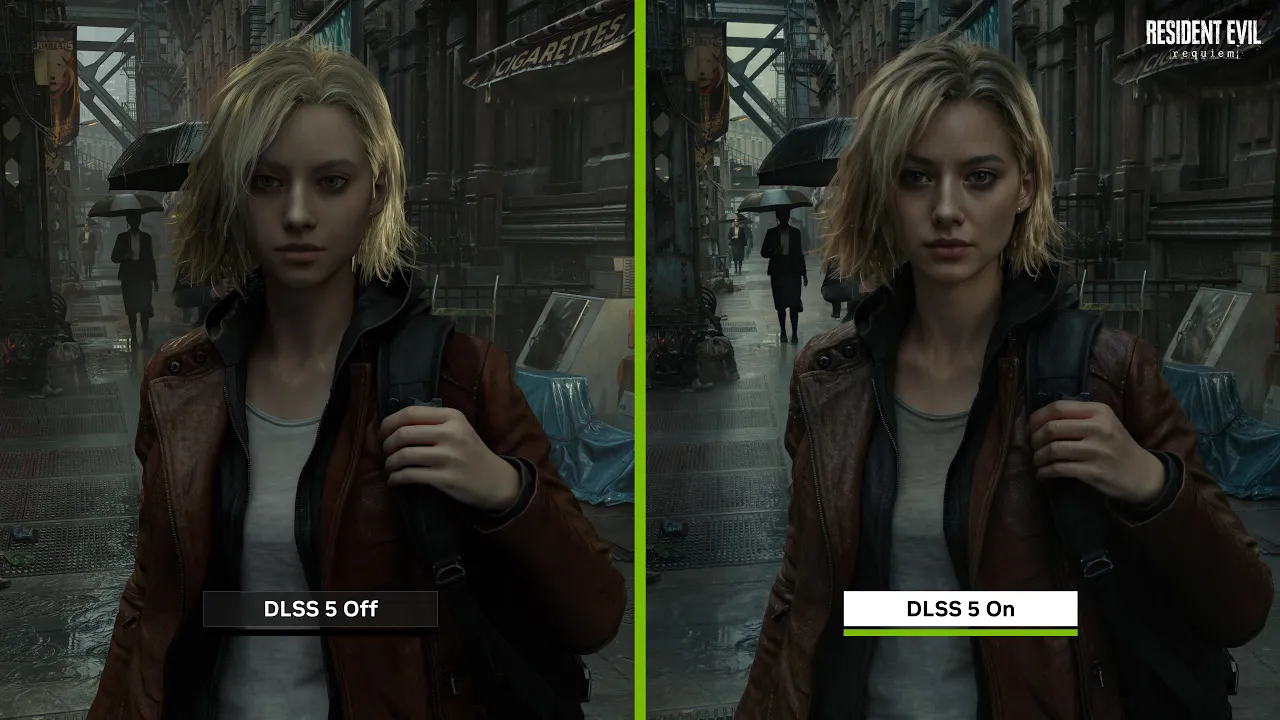
DLSS 5 introduces a real-time neural rendering model designed to add photorealistic lighting and material properties to game graphics. It receives the color information and motion vectors produced by the game for each frame. The AI model then analyzes the scene and enhances its visual appearance while remaining anchored to the original 3D content.
This distinction matters. DLSS 5 is not intended to generate an unrelated image from a text prompt. Games require predictable results that remain consistent while the player moves, the camera rotates, and lighting conditions change. NVIDIA says the output is deterministic, temporally stable, and capable of running in real time at resolutions up to 4K.
What Could DLSS 5 Improve?
The model has been trained to recognize characters, hair, fabric, skin, and different environmental lighting conditions. This enables it to reproduce effects that are difficult and expensive to calculate using conventional real-time rendering.
Skin, for example, does not simply reflect light from its surface. Some light penetrates and scatters beneath it, creating the softer appearance associated with real human faces. DLSS 5 can also improve the way light interacts with individual strands of hair, translucent materials, clothing, and surfaces with a subtle sheen.
The potential benefit is not limited to photorealistic games. Developers receive controls for effect intensity, color grading, and masking. These tools allow artists to decide where the neural model should be applied and help preserve the visual identity of a stylized game instead of automatically making every scene look realistic.
How Is It Different From DLSS 4.5?
DLSS 4.5 remains focused on image reconstruction and performance. Its features include Super Resolution, Ray Reconstruction, Frame Generation, and Dynamic Multi Frame Generation. These technologies reconstruct higher-quality pixels, improve ray-traced effects, or create additional frames to increase perceived smoothness.
DLSS 5 adds another layer to this process. Rather than concentrating mainly on resolution and frame rate, it interprets scene content to improve the final representation of light and materials. It therefore complements existing DLSS features instead of simply replacing them.
Which Games Will Support DLSS 5?
NVIDIA has announced support from publishers and developers including Bethesda, CAPCOM, Ubisoft, Warner Bros. Games, Tencent, NetEase, and NCSOFT. Confirmed games include Resident Evil Requiem, Starfield, Hogwarts Legacy, Assassin’s Creed Shadows, Phantom Blade Zero, NARAKA: BLADEPOINT, and The Elder Scrolls IV: Oblivion Remastered.
DLSS 5 is scheduled to arrive in fall 2026. However, NVIDIA has not yet published complete hardware compatibility details or comprehensive performance data. Independent testing will be needed to determine its processing cost, latency, image stability during fast movement, and susceptibility to visual artifacts.
Is This the Future of Game Rendering?
DLSS 5 could mark the point at which AI moves beyond reconstructing missing pixels and begins interpreting how a digital world should look. It may help games approach cinematic lighting without requiring every effect to be calculated through brute force. The real test will be whether it can deliver that improvement consistently while respecting artistic intent and maintaining responsive performance during actual gameplay.


