

Many people know that an IMEI number can identify a mobile device on a cellular network. But can websites see your IMEI when you visit them from a smartphone?
In most normal browsing situations, the answer is no. A regular website does not need your IMEI to recognize your device or track repeated visits. Instead, websites can use a different method called device fingerprinting.
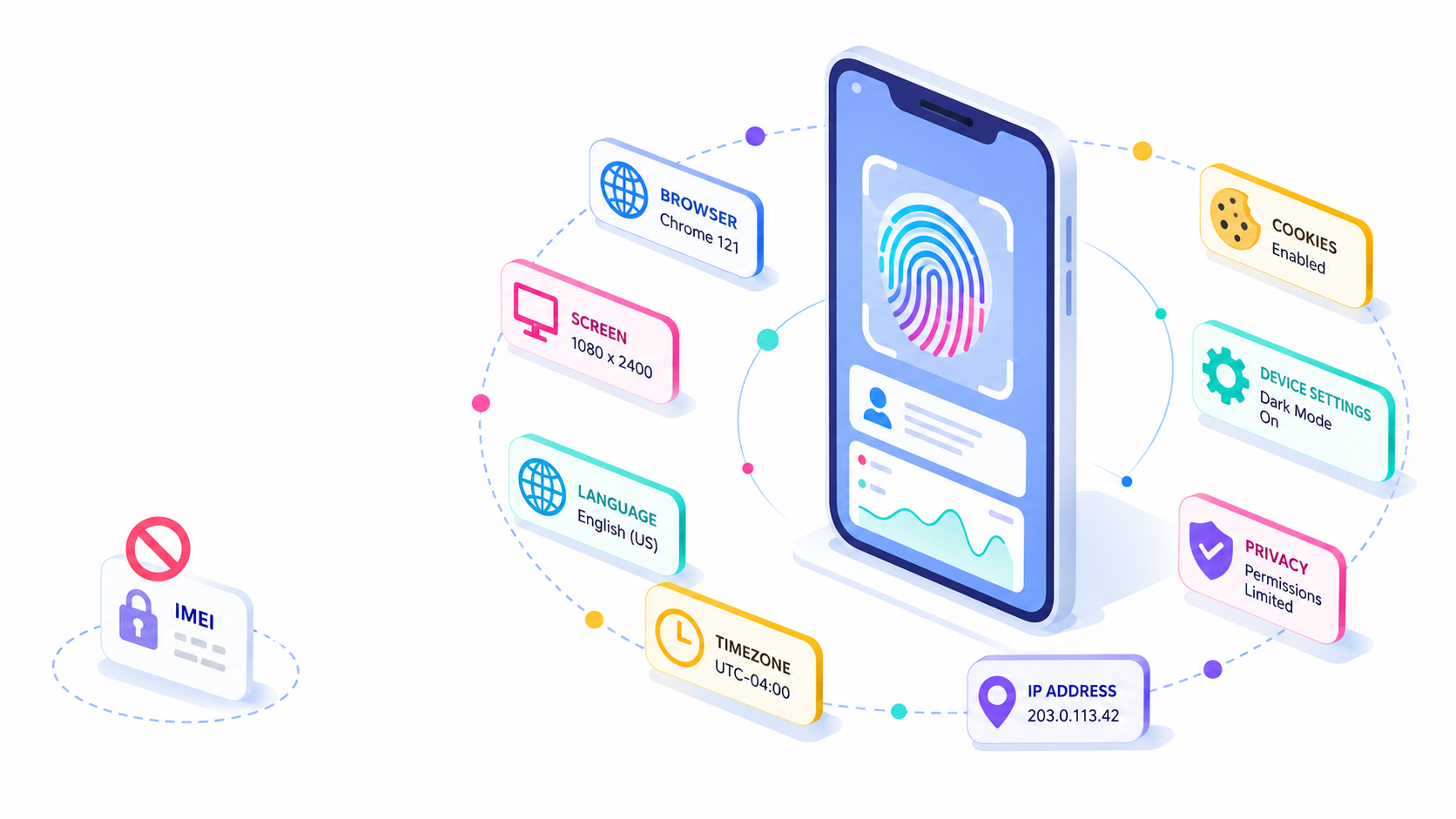
Device fingerprinting is a way of identifying a browser or device by combining many small technical details into one recognizable profile.
Quick Answer
Websites usually cannot see your IMEI through a normal mobile browser. However, they may still recognize your phone using browser fingerprinting, cookies, IP address, login data, advertising identifiers and other signals.
This does not mean every website knows exactly who you are. But it does mean that hiding your IMEI is not the same as being anonymous online.
What Is Device Fingerprinting?
Device fingerprinting is a tracking method that collects details about your browser, phone and settings. Each detail may seem harmless on its own, but together they can create a profile that is fairly unique.
A website may look at information such as:
- browser type and version,
- operating system,
- screen size and resolution,
- language and timezone,
- installed fonts,
- available media formats,
- device memory or performance signals,
- browser settings,
- IP address,
- cookies and local storage.
This information can help websites recognize that the same browser or device has visited before.
Device Fingerprinting vs IMEI
An IMEI is a hardware identifier used mainly by mobile networks, carriers and device-checking systems. It is important for things like blacklist checks, lost or stolen phone reports and network identification.
Device fingerprinting is different. It usually works inside the browser and does not require access to your IMEI.
That is why a website can sometimes recognize your phone without knowing its IMEI number.
Fingerprinting vs Cookies
Cookies are small pieces of data saved by websites in your browser. They can remember logins, preferences, shopping carts and tracking IDs.
Fingerprinting is different because it can work by observing your browser and device characteristics. Clearing cookies may reduce tracking, but it may not remove every fingerprinting signal.
In practice, websites and advertisers may combine several methods: cookies, IP address, account login, device fingerprinting and tracking links.
Can a VPN Stop Device Fingerprinting?
A VPN can hide or change your public IP address. This can make it harder for websites to know your real network location.
But a VPN does not change your phone’s IMEI, browser version, screen size, language settings or other fingerprinting signals. So while a VPN can improve privacy in some ways, it does not make your phone invisible online.
How to Reduce Fingerprinting
You cannot remove every fingerprinting signal, but you can reduce how easy it is to track you.
Good habits include:
- keep your browser and operating system updated,
- use privacy-focused browser settings,
- block third-party cookies where possible,
- avoid installing unnecessary browser extensions,
- use private browsing for sensitive sessions,
- clear site data regularly,
- avoid logging into the same accounts everywhere,
- limit app and browser permissions.
Some browsers also include built-in protections against cross-site tracking and fingerprinting.
Why This Matters for Smartphone Users
Smartphones are personal devices. People use them for banking, shopping, messages, maps, email, social media and work accounts.
Even if a website cannot access your IMEI, it may still build a profile around your browsing behavior. That profile can be used for advertising, fraud detection, analytics, personalization or security checks.
The key point is simple: online identification does not depend on one number. It often comes from many small signals combined together.
Bottom Line
Your IMEI is important, but it is not the only way a device can be recognized.
A normal website usually cannot read your IMEI through your mobile browser. However, websites may still recognize your phone using device fingerprinting, cookies, IP address and account activity.
If you care about privacy, do not focus only on hiding one identifier. Use updated software, review browser settings, limit permissions and understand that online tracking often works through many small clues — not just one device number.


Recent Comments